EnviNET

Information

Green Group

International corner of Envinet for people interested in sharing enviromental information and opinion.

Sign in !

Members: 55
Latest Activity: Dec 11, 2017

Tire Art

The Best Tire Art

tire art
Tire Frame by Chakaia Booker
Pic: newcambridgeobserver.com
chakaiabooker.com

tire sculpture
Male Torso that left his path
by Chakaia Booker, 1992-1995.
chakaiabooker.com

tire sculpture
Industrial Perpetuosity, 1997
tire sculptureBy Chakaia Booker

chakaiabooker.com

Meeting Ends
By Chakaia Booker
chakaiabooker.com

tire sculpture
Vacancy
By Chakaia Booker
Photo: artscriticatl.com

tire sculpture
Pneu by Wim Delvoye
wimdelvoye.be

tire sculpture
Pneu by Wim Delvoye
wimdelvoye.be

tire sculpture
Requiem by Betsabee Romero Carve and then roll…
She was born in Mexico City in 1963.
arte-mexico.com

tire sculpture
Espiral Sin Fin by Betsabee Romero
5 llantas grabadas
arte-mexico.com/betsabee

tire sculpture
Lion Woman 1 by Yong Ho Ji
2007, 120 x 50 x 75 cm, used tires, synthetic resins.
yonghoji.com

tire sculpture
Bull Man 4 by Yong Ho Ji
2010, 100 x 150 x 200 cm (6′ 7″)
More pics: yonghoji.com

tree made from tires
Ficus Elastica Robusta
By Ann Carrington
Commissioned by Seeds of Change
Hampstead Heath, London
6m x 9m x 5.5m
anncarrington.co.uk

tire tree
Ficus Elastica Decora
By Ann Carrington
Commissioned by Rothschild Estate, Waddesdon Manor, Buckinghamshire
6m x 8.5m x 5.2m
anncarrington.co.uk

tire reuse
Ficus Elastica Decora
By Ann Carrington
anncarrington.co.uk

tire reuse
Ficus Elastica Decora
By Ann Carrington
anncarrington.co.uk

tire reuse
Douglas White
Dazed and Confused
sculpture.org.uk

tire sculpture
Carolyn Butts Tire Tapestry
See her site for more designs…
bon-eco.com

tire wall art
Carolyn Butts Tire Tapestry
Painted white
bon-eco.com

tire sculpture
“Suckling is Continuous” three large spheres shrouded in found tire elements
By Kathy Kelley Buffalo Bayou Art Park
Photo Maorlando flickr.com

tire sculpture
“Chinu – the black sea bream of Osaka Bay” 2007 about 8m long.
By 2 persons collectively known as Yodogawa Technique who create art works from rubbish from the river Yodogawa area in Osaka where they are based.
yukariart-contemporary.com

tire sculpture
Tire-Serpent by Mirko Siakkou-Flodin
oddee.com

tire art
Decogomme Screen
Den Haag, Dutch Ministry, Netherlands, june 2006
millegomme.com

tire chairs
Tire Chairs and Planter
Green Invasion Lima, Peru
via Treehugger

tire chairs
Walkable Tire Sculpture
Green Invasion Lima, Peru
Treehugger

tire furniture
Recycled Truck Tire Ottoman and Stools
Via keetsa.com

tire table
Bon Eco – marble top, tires rubbed with ochre.
Carolyn Butts, Ontario
bon-eco.com

tire tube chairs
Tire Tube Chairs & Setee by Nir Ohayon
Handmade metal frames with inflated tubes stuffed in.
See more pics here: recycoool.com

tire chair
Tired Lounge
By Leo Kempf
360seegallery.com

tire chair
Tire chair
Happy Hardcore
by Fernanda Fajardo
coroflot.com

tire table
Jean-Michel Basquiat Marble Cafe Table
by Dino Paxenos
Mediascapegoat

tire chair
Tire chair
Only suitable for Basements!
By Italian designer Zak – RunOnFlat Goodyear tires.
gadgetblog.it

tire swing
Tire chair
Fairly Easy to Make Swing
See more pics: millegomme.com

tire swing
Gravity Passengers
Mafikeng South Africa, June 2010
Multi-Person Tire Swings
See more pics: millegomme.com

tire sink
Recycled Tire Sinks
Bristol and Bath Second Chance Collection
cft411.com

recycled tire sink
Recycled Rubber Sink by Minarc
Melted old tires
interiordesign.net

tire chair
Tire chair
Hermit Crab Chair
Molded ceramic that slips on top of a tire!
The tire is your cushioning and base.
yankodesign.com

tire chair
Tire chair
Millegome Chair
millegomme.com

tire house
Maison Gomme
By Den Haag, july 2005.
Not the best look but scratch resistent!
More pics here: millegomme.com

tire house
Tire Foundation, Patio and Stairs
More pics: ventasalud.com

tire foundation
Off to a sturdy start
An Earthship

tire roof
Tire Roof, Vancouver, BC.
Photo by Jennifer Loring
flickr

tire roof
Euroshield
Recycled car tires molded into roofing
euroshieldroofing.com

tire pail
Tade Barrels
Pics: be.com
tade.fr

tire handbag
Car Inner Tube Tire Handbags (note the valve)
zuss.com
neumaticanet.com.ar

tire sculpture
Wrench II By (the very talented) Chakaia Booker, 2001.

The Most Famous Tire Art Piece Of All

rauschenberg goat

Robert Rauschenberg (American, 1925-2008). Monogram, 1955-59. Angora goat, tire, tennis ball. 42 x 63 x 64 in. Moderna Museet, Stockholm. © Robert Rauschenberg / Adagp, Paris, 2006

Tire Art: Much Better Than Burning Them

Today a typical tire consists of about 28 percent natural rubber, 28 percent synthetic rubber (made from oil), and 28 percent carbon black filler—a material produced by the incomplete combustion of heavy petroleum products. Anywhere from 15 to 38 liters of oil is used to make a standard tire. The remaining 16 percent of the tire is composed of different functional agents such as Softeners (hydrocarbon oil, resins), Antidegradants (para-phenylenediamine, paraffin), Curatives (sulfur, sulfemamides) and Activators (zinc oxide, stearic acid).(1) If tires burn, it is an extremely toxic coctail, both for the atmosphere and nearby groundwater. Hopefully, the future holds promise, as manufacturers are now testing more sustainable ingredients.

The use of scrap tire chips for landscaping has become controversial, due to the leaching of metals and other contaminants from the tire pieces. Tires can concentrate (up to 2% by weight) zinc to levels high enough to be extremely toxic to aquatic life and plants. (2,3)

Michael Reynolds, who has been constructing Earthship Homes for 35 years using rammed earth tires, said he has never had one complaint of offgassing. Most likely because the tires are plastered and protected from the elements. It is believed a large percentage of the offgassing happens when the tire is new. earthship.com

1) ecosystm.org
2) ardeacon.com/pdf
3) puyallup.wsu.edu
Discussion Forum

27 Easy Ways To Eat Healthier

Started by CARE Oct 2, 2017. 0 Replies

 ....and choose organic1. Bananas, eggs, and peanut butter are all you need to make healthy, gluten-free pancakes.…Continue

Show off your homes for nature

Started by CARE May 31, 2016. 0 Replies

Show off your homes for natureWe'd love to see how you, your family and neighbours have…Continue

European citizens to help tackle marine litter

Started by CARE May 21, 2016. 0 Replies

 Image © Dimitris Poursanidis (Environment & Me /EEA)Litter, plastics in particular, is accumulating in our seas and coasts mainly due to current unsustainable consumption and production…Continue

Permaculture People

Started by CARE Jul 9, 2015. 0 Replies

Living With The Land Part 2 - Natural Buildinghttps://www.youtube.com/watch?v=FhX8BTwkiD0Kevin McCloud, presenter of Channel 4's 'Grand…Continue

Comment Wall

Comment

You need to be a member of Green Group to add comments!

Comment by CARE on June 13, 2016 at 9:36am

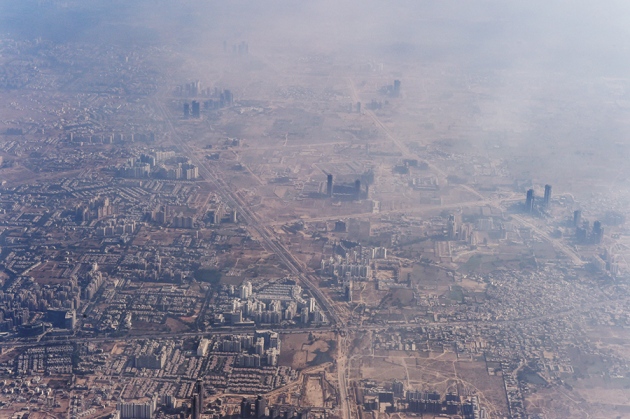
Can Delhi save itself from its toxic air?

India’s capital city scrambles to tackle its epic pollution problems.


Roberto Schmidt/AFP/Getty

A brown cloud of pollutants hangs over the outskirts of New Delhi.

On winter nights, New Delhi burns with innumerable fires. Flames flicker along pavements and street corners, where the destitute huddle to stay warm and cook their suppers, while night watchmen stand guard next to their own small blazes outside private homes. The rising plumes of smoke mingle with exhaust and dust stirred up by overloaded trucks that rumble down roads blanketed in fog. The mixture melds into a nearly opaque substance that leaves a metallic taste on the tongue. Overhead, there is not a single star to be seen.

continue on

http://www.nature.com/news/can-delhi-save-itself-from-its-toxic-air...

Comment by Angela Pitteri on June 10, 2016 at 10:35am

Thankyou Angela. My friend Nathalia told me ho you met on the beach while cleaning up rubbish. I live on the most beautiful island in the world - Lord Howe Island- with just 350 residents. In 2000 I found a seabird skeleton with the ribcage full of plastic pieces - so started research and awareness campaigns about ocean plastic debris. I would like to share some photographs and results of research - because even though Lord Howe Island is very clean and has World Heritage protection, our seabirds are feeling impacts of ocean debris from around the world that the seabirds pick up at sea thinking it is food. I am not sure how to get photos and information to you; Nahalia gave you my email , that may be easiest. I will look on your website too.

Ian

https://www.facebook.com/ian.hutton2?fref=ts


Comment by CARE on May 7, 2014 at 11:18am


The Easy Way to Start Composting

Despite what you've heard, composting at home doesn't have to be complicated.

By Paul Hope


Compost is king when it comes to growing a beautiful garden. This nutrient-rich black dirt forms as vegetable and plant matter decomposes. It's easy to do, is a great way to use food scraps and other items (that might otherwise end up a landfill), and bonus: It's virtually free.

Start with a space.
First, decide whether you want to use a closed container or open space near your garden. Naturally, a closed bin is easily contained, but it can make regulating moisture a challenge, and it will holds less compost. An open pile is easier to mix and monitor, but can be quite unsightly (it is a heap of decomposing material, after all). Whichever you choose, keep it outside, as the compost will emit a distinct odor as the matter breaks down.

Get mixing.
Start your heap with dirt from your garden, and begin adding food scraps. Throw them in regularly (say, after dinner each day), and also maintain a balanced mixture of wet green material (grass clippings and vegetable peels), and dry brown material (chopped leaves and shredded paper). Stir the pile every week or two evenly to distribute the beneficial bacteria growing inside. Keep the mixture moist, but not soaking wet. In time (a few weeks to a couple months), you'll have a fantastic, nurtient-packed soil.

RELATED: 13 Plants That Give You Bang for Your Buck »

Say "yes" to adding these ... 
Grass clippings, chopped leaves, vegetable and fruit scraps, weeds, straw and hay, and shredded paper and cardboard are all great additions to your pile. Even egg shells, coffee grounds and dryer lint are fair game.

... but "no" to these. 
Meat and other fatty food scraps can attract unwanted critters. And avoid any inorganic matter, like plastic, treated wood or grass-clippings that have been treated with herbicide. Some experts caution against placing weeds in your compost pile, too. If they're seeding, they might eventually pop up in your garden. 

TELL US: Do you compost at home?

http://www.goodhousekeeping.com/home/gardening/start-composting

Comment by CARE on November 22, 2013 at 3:47pm

The Minamata Convention for Mercury is a global treaty to protect human health and the environment from the adverse effects of mercury. It was agreed at the fifth and final session of the Intergovernmental Negotiating Committee in Geneva, Switzerland at 7 a.m. on the morning of Saturday, 19 January 2013. The major highlights of the Minamata Convention on Mercury include a ban on new mercury mines, the phase-out of existing ones, control measures on air emissions, and the international regulation of the informal sector for artisanal and small-scale gold mining. The Convention draws attention to a global and ubiquitous metal that, while naturally occurring, has broad uses in everyday objects and is released to the atmosphere, soil and water from a variety of sources. Controlling the anthropogenic releases throughout its lifecycle has been a key factor in shaping the obligations under the convention.

http://www.mercuryconvention.org/Publications/tabid/3429/Default.aspx

Comment by CARE on July 16, 2013 at 10:52am

Fiction: Drug Production Does Not Damage the Environment

Fact: The cultivation and production of drugs has harmful effects on the environment.

One of the most overlooked aspects of the illegal drug trade is how drug cultivation and production the cost of drug production destroy the environment. Illegal drugs have a far-reaching impact on the environment, including:

  • Destruction of U.S. National Forests for marijuana growing
  • Dumping of hazardous waste byproducts of meth manufacturing into the water supply

Illegal drug production damages forests, streams, rivers, and wildlife. If you think drug use isn’t harming anyone, think twice.

continue on http://www.justthinktwice.com/factsfiction/fiction_drug_production_...

Comment by CARE on July 16, 2013 at 10:43am
The coca and poppy cultivation in the Andean jungle is
significantly damaging the environment in the region
The main
threats to the environment are deforestation caused by clearing
the fields for cultivation, soil erosion caused by several
factors, and chemical pollution from insecticides and
fertilizers.  Additionally, the process of converting coca and
poppy into cocaine and heroine has adverse effects on the
environment as well.  These environmental issues are difficult to
address due to cocaþs position as a traditional crop and trade
item, the influence and wealth of the drug traffickers opposing
restrictions, and the issue of national sovereignty.  Most
realize the social impact of the drug trade worldwide, but few
realize the environmental impact.  Hopefully, this case study
will help bring the situation to light. 
continue on http://www.druglibrary.org/schaffer/cocaine
Comment by CARE on June 19, 2013 at 12:20pm

Minister ignores greatest threat to reef: industrialisation     Australian Marine Conservation Society

The Australian Marine Conservation Society (AMCS) has challenged the Minister for the Environment Tony Burke to address the core concerns of the World Heritage Committee over the issue that could ruin the Great Barrier Reef – industrialisation including port development, thousands more coal ships and dredging and dumping in the Reef’s waters.

Felicity Wishart, Great Barrier Reef campaign director for AMCS, said that Minister Burke did not once mention dredging or dumping, shipping or port development in his response to the World Heritage Committee which yesterday denounced Australia’s performance in protecting one of the wonders of the world.

“The Environment Minister has a responsibility to protect the Great Barrier Reef from industrialisation. However he appears to be ignoring the risks, the warnings and the impact of dredging, dumping and shipping.

“We are witnessing the biggest, fastest and most widespread industrial development in the history of the Queensland coast and it deserves to be addressed by Minister Burke.

“The world is worried, Australians are worried, scientists have expressed their concern, local communities are up in arms and no one along the coast wants what happened in Gladstone to spread up the Reef.

“The Queensland and Australian governments are claiming that everything is fine and there’s nothing to worry about, according to their press statements yesterday.

Nothing could be further from the truth.

“We call on both governments to actually address the concerns of science, communities, fishers and the international community.

“If Minister Burke is serious about protecting the Reef, and the $6 billion dollars and 60,000 jobs that go with it, he must start by rejecting the proposal to allow three million tonnes of dredging proposed for Abbot Point.

“We have heard consistently that the Reef is safe because the governments have put funds into decreasing farm run-off and improving water quality. That is progress – but it won’t stop the shipping, dredging, dumping and port development that could undo any good work by farmers and ruin the Reef.

“Minister Burke has a choice. Does he want to leave a legacy that will protect the Reef from this massive new threat or be seen to have contributed to its decline.

“We urge Minister Burke to take a stand and defend our Great Barrier Reef,” said Ms Wishart.

For more information please call Adrian Dodd on 0401726476

http://fightforthereef.org.au/

Comment by CARE on June 17, 2013 at 3:15pm

Monetary valuation as one approach to demonstrate the value of wetlands 

Different approaches and tools can help assess the benefits that flow from water and wetlands by providing different and complimentary information to demonstrate their value. Examples of these approaches and measures include qualitative, quantitative, spatial and monetary. Monetary valuation can significantly help demonstrate the importance of wetlands to society and the economy, and thereby help argue for their protection, wise use and restoration. However, a single methodology cannot reflect all values embedded in water-related ecosystem services and wetlands, and therefore it is important to use a combination of different approaches monetary and non-monetary to demonstrate value. Monetary valuation can translate part of the information obtained through qualitative and quantitative indicators into monetary figures. For example, the wastewater purification service provided by healthy wetlands can be valued in monetary terms through the equivalent cost of a wastewater treatment plant that would provide a similar service. Additionally, the revenues generated from tourism can give an indication of the importance of the cultural ecosystem services provided by wetlands. Some ecosystem services have a direct economic value that can be readily monetised, such as the local economic value of fish catches. Monetary valuation can give an indication of the society’s preferences that is easily understandable and communicable. It can help make explicit preferences that are normally hidden and not reflected in market prices for example the preference for clean water. In many cases, provisioning ecosystem services such as food or timber are more visible and are favoured in the policy-making process, because they have a market price. But there are many other ecosystem services that are less visible and often overlooked or underrepresented in the policy-making processes. The calculation of the economic value of traditionally less well covered provisioning services such as the value of some genetic materials or of water provision from wetlands and non-provisioning ecosystem services such as water purification, waste water treatment, and erosion control contribute to the arguments for their conservation, wise use and restoration. The outcomes of any valuation process depends on what the various stakeholders value, whose values count, who benefits, and the manner in which social and ecological systems interlinkages are accounted for. Values and the process of valuation reflect socially and culturally constructed realities linked to worldviews, mind-sets and belief systems shaped by social interactions ,as well as political and power relations operating within a realm of local, regional and global interdependencies. Extracted from the report: The Economics of Ecosystems and Biodiversity for Water and Wetlands, section 3.4 Monetary valuation The report presents insights on critical water-related ecosystem services and the wider ecosystem services from wetlands, in order to encourage additional policy momentum, business commitment, and investment in the conservation, restoration, and wise use of wetlands.

http://www.teebweb.org/monetary-valuation-s-one-approach-to-demonst...

Comment by CARE on May 7, 2013 at 4:57pm

Committee Application UMass Permaculture Committee: A Garden at Hillside The UMass Permaculture Committee is a three credit cooperative experience where students and staff get together to design the permaculture landscapes on the UMass Campus! We have spent all winter analyzing the site of our newest garden, and developed design options to present to UMass Chancellor Subbaswamy for a garden in his Hillside property! During this stage of the permaculture design process, we're revisiting our goals for the site, and the goals of the client, while finalizing our design. Jono Neiger, a professor at the Conway School of Design teaching regenerative design and co-founder of Regenerative Design Group, has helped with the design process along the way. Connect with us on Facebook @ UMass Amherst Permaculture to learn about upcoming garden workdays!


http://us5.campaign-archive2.com/?u=054c96ceadff564798153417d&i...

Comment by CARE on January 24, 2013 at 12:57pm

GOOD NEWS: a milestone reached as gibbons in India welcome a new baby to their family

Sharing with you all the exciting news from our gibbon rescue project in Arunachal Pradesh.

The female in one of the gibbon families that we had moved about a year ago has given birth!

The baby has been named 'Ouiji', which stands for 'Hope' in the local dialect.

The project lead, Kuladeep, managed to secure some first photographs of the gibbon with the baby. Sharing those with you.

Those of you who were involved in the project would be aware, that it took us nearly two years to plan out the best method possible to save these gibbon families.

The birth marks a milestone in the project and establishes that the gibbons are doing well in the release site.

Sashanka Barbaruah, Communications Manager, IFAW/Wildlife Trust of India

http://www.ifaw.org/united-kingdom/news/good-news-milestone-reached...


Members (55)

0lll7g0lbqhl6


Translator

Video

  • Aggiungi video
  • Visualizza tutti

© 2026   Creato da Maker.   Tecnologia

Badge  |  Segnala un problema  |  Termini del servizio

/* disattivato a seguito entrata in vigore cookies law */